

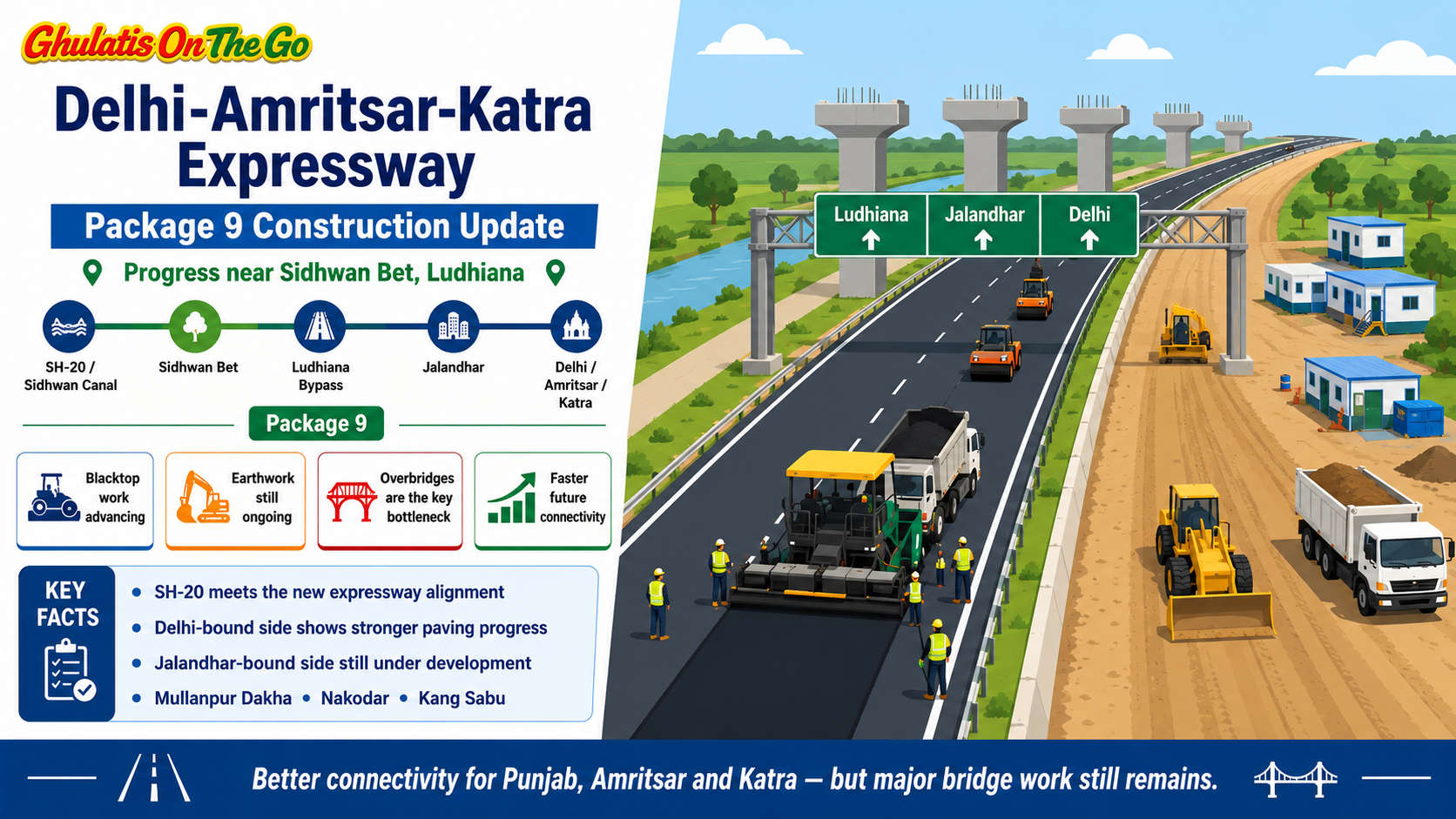
The Delhi-Amritsar-Katra Expressway is a significant infrastructure project aimed at enhancing connectivity across Punjab and beyond. This report provides an update on the construction progress of Package 9, specifically focusing on the stretch near Sidhwan Bet, Ludhiana. The project is designed to improve travel times and facilitate economic and religious tourism between Delhi, Amritsar, and Katra.
The journey begins on State Highway 20, which runs alongside the Sidhwan Canal, connecting Ludhiana to various villages. This existing road will eventually intersect with the new Delhi-Katra Expressway. The current focus of construction is on the expressway's alignment, particularly in areas that bypass Ludhiana and head towards Jalandhar and Delhi.
Initial Observations and Route Details
The drive commences on State Highway 20, a well-maintained road lined with trees. Along this route, several villages are mentioned, including Bhundri, Gorsian, Kadar Baksh, Talwandi Kalan, and Swadi Kalan. These villages are situated in the vicinity of the expressway's path. The initial section of the journey highlights the transition from the existing state highway to the newly developed expressway alignment.
Upon reaching the expressway, the landscape shifts dramatically from green fields and established roads to a construction zone. The initial entry onto the expressway reveals a dirt track, indicating ongoing earthwork and filling activities. This segment of the expressway is part of Package 9, which covers the Mullanpur Dakha, Nakodar, and Kang Sabu sections.
Expressway Construction Progress
The progress on the expressway is evident, with significant earthwork completed. The drive along the new alignment showcases sections where blacktop work has already commenced, indicating a substantial advancement in road construction. Concrete retaining walls are also visible along the sides of the expressway, providing structural support and defining the road's boundaries. This particular stretch is designed to bypass Ludhiana, directing traffic towards Jalandhar.
As the journey continues, the extent of the blacktop work becomes more apparent. Approximately one kilometer into the expressway, the blacktop is largely complete, suggesting a steady pace of development. While heavy machinery is observed in the distance, indicating ongoing work, the immediate section of the road appears finished, with no active construction crews directly on the paved surface. This completed section offers a glimpse into the future state of the expressway.
On-Site Construction Activities
Further along the expressway, active construction is observed, with machinery and workers engaged in various tasks. Large road pavers are seen, emitting smoke as they lay down asphalt, confirming that blacktop work is actively underway in certain areas. Construction camps, including temporary shelters and parked trucks, are also visible, supporting the ongoing operations. Workers are present, indicating continuous efforts to advance the project.
Discussions with on-site labor reveal that approximately one kilometer of the expressway is nearing completion, with significant progress on the blacktop. The workers also mention the presence of a plant further ahead, which supplies materials for the construction. This suggests a well-organized logistical chain supporting the extensive road-building efforts.
Overbridge Status and Future Outlook
Upon turning back towards the entry point, the focus shifts to the overbridges, which are crucial for the expressway's full functionality. The side of the expressway heading towards Delhi shows completed blacktop, while the opposite side, leading towards Jalandhar, still has ongoing earthwork. This indicates a phased approach to construction, with different sections progressing at varying rates.
The overbridges, however, appear to be a bottleneck. While the main road sections are being paved, the pillars for the overbridges are still under construction, with no visible progress on the bridge decks or other structural components. This suggests that despite the advancements in road paving, the overall completion of the expressway, particularly for traffic flow over intersecting roads, will depend on the progress of these critical overpasses. The current state of the overbridges indicates that the expressway may not be fully operational in the near future, as these structures are essential for seamless connectivity.
Practical Takeaways
The visit to Package 9 of the Delhi-Amritsar-Katra Expressway reveals a mixed picture of progress. While the blacktop work on the main expressway alignment is well underway, particularly on the Delhi-bound side, the construction of overbridges remains a significant challenge. The lack of substantial progress on these crucial structures suggests that the full opening of this section of the expressway might be delayed. Travelers should be aware that while stretches of the road are being paved, the integration with existing road networks via overbridges is still a work in progress. Future updates will likely focus on the advancement of these overpasses and the completion of the Jalandhar-bound side of the expressway.
Watch the Original Journey
This article is connected to the original Ghulatis On The Go video below. Watch it for the complete visual experience and conversations from the road.