

Punjab has always welcomed people.
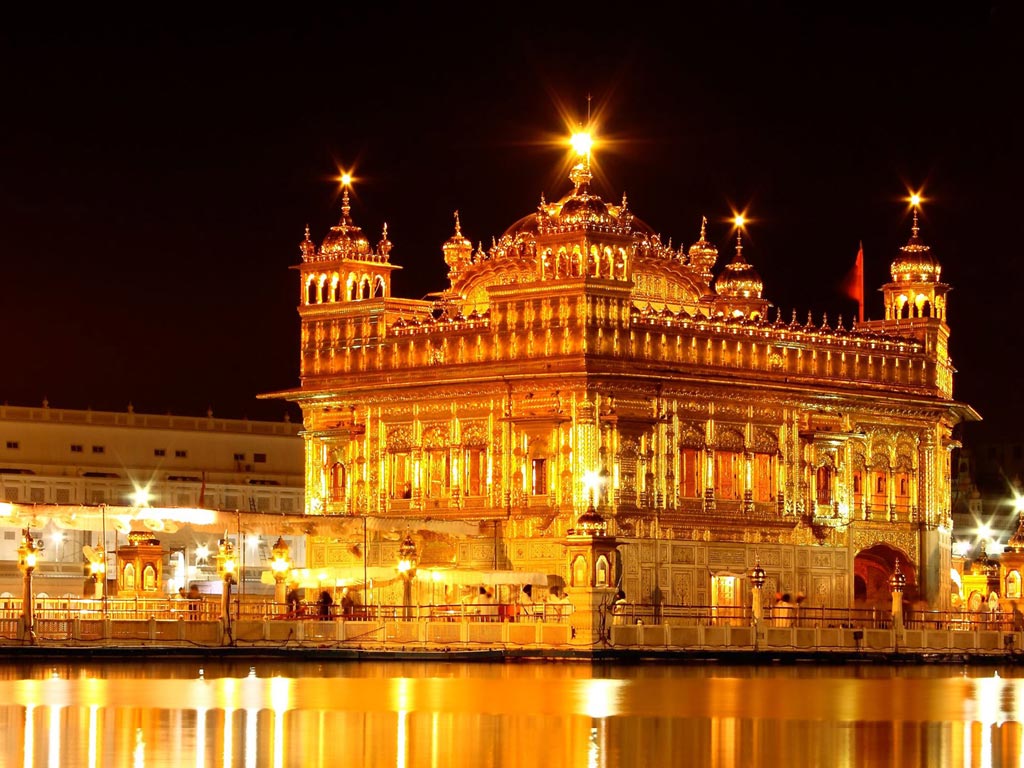
Some come with folded hands. Some come with cameras. Some come to remember history. Some come to eat, shop, attend weddings, visit relatives, see villages, or show their children where their grandparents once lived. For many visitors, Punjab is not simply a destination on a map. It is an emotional place. It is the sound of kirtan at dawn, the glow of the Golden Temple reflected in the Amrit Sarovar, the silence inside Jallianwala Bagh, the roar of crowds at the Attari-Wagah border, the taste of Amritsari kulcha, the colors of phulkari, and the welcome of families who still believe a guest is to be served with full heart.
Tourism in Punjab is important because it does more than bring visitors. It supports hotels, restaurants, taxi drivers, guides, travel agents, shopkeepers, artisans, farmers, event workers, airport services, railway-linked businesses, photographers, local food vendors, and cultural performers. Tourism turns movement into livelihood. A pilgrim buying tea, a family booking a room, an NRI hiring a car, a couple visiting heritage sites, or a group stopping at a dhaba all become part of a larger local economy.
But a factual story about Punjab tourism must also be honest. Official Ministry of Tourism data shows a strong rise in Punjab’s tourist visits from 2022 to 2023, followed by a decline in 2024 from that 2023 level. So the story is not that every year rises in a straight line. The real story is that Punjab’s tourism sector has strengthened over time through heritage investment, spiritual tourism, rural tourism policies, new infrastructure projects, and continuing visitor interest, even while annual numbers move up and down.
The Past: Punjab Was a Destination Before Tourism Became an Industry
Long before tourism was counted in millions of visits, Punjab was already a land of movement. Its shrines, markets, forts, rivers, trade routes, agricultural villages, and historic towns drew travelers for faith, trade, family, migration, and memory. Punjab’s identity as the land of the Sikh Gurus, its role in India’s freedom struggle, its rural life, and its food culture all became part of what later turned into organized tourism.
The Government of Punjab’s 2018 tourism policy described the state as having cultural, historical, religious, natural, scenic, man-made, culinary, folk, festival, arts, crafts, and hospitality strengths. The same policy called Punjab both the “granary” and “shield” of India and noted that the state had made significant investments in tourism and culture through its own budget and through assistance from the Asian Development Bank-backed IDIPT project.
Punjab’s older tourism strength was rooted most deeply in religious and heritage travel. Sri Harmandir Sahib, widely known as the Golden Temple, remains the emotional heart of Punjab tourism. Incredible India describes it as a symbol of spirituality, unity, service, equality, and community, and notes that it attracts millions of visitors from around the world every year.
This is where Punjab’s tourism becomes human. A visitor to Amritsar may arrive as a tourist, but many leave feeling like they experienced something more personal. The langar at Sri Harmandir Sahib is not a performance staged for visitors; it is living faith in action. People sit together, eat together, and are served together. For a traveler, this may become the most powerful memory of the trip. For the local economy, that same journey may also support hotels, rickshaws, taxis, restaurants, sweet shops, jutti sellers, phulkari stores, and tour operators.
Jallianwala Bagh: Tourism as Memory
Not all tourism is joyful. Some tourism is about remembrance.
Jallianwala Bagh in Amritsar is one of Punjab’s most important historical sites. The District Amritsar administration describes it as a memorial to Indians who were killed or wounded on April 13, 1919, during a peaceful public meeting, and notes that bullet marks and the memorial well are preserved at the site.
For Punjab’s travel industry, Jallianwala Bagh is not just another stop on a city tour. It is a place where families slow down. Tour guides lower their voices. Parents explain history to children. Visitors who may have arrived for the Golden Temple often walk to Jallianwala Bagh and leave with a different understanding of Amritsar. The local economy benefits from visitor movement, but the deeper value is educational and emotional.
This is one of Punjab’s strengths: its tourism is layered. A single day in Amritsar can include prayer, food, shopping, freedom-struggle memory, border ceremony, and family photography. Few destinations can hold so many emotions in such a compact travel circuit.
The Attari-Wagah Border: Patriotism Becomes a Visitor Experience
Punjab’s tourism story also carries the drama of the border. The District Amritsar administration describes Wagah as the international border between India and Pakistan and says the evening Beating Retreat ceremony is the daily highlight, with soldiers marching in drill before the national flags are lowered.
For visitors, the Attari-Wagah ceremony is not a quiet monument. It is sound, movement, discipline, flags, applause, and national feeling. It brings families, school groups, domestic tourists, and foreign travelers into the Amritsar travel circuit. When visitors travel from the Golden Temple area to the border, they use cars, buses, guides, eateries, parking services, and local vendors. This is how tourism spreads money beyond one site.
The future importance of border tourism is also visible in government projects. The Ministry of Tourism listed Border Tourism Experience at Attari, Amritsar as a sanctioned project under Swadesh Darshan 2.0, with a sanctioned cost of about ₹25.91 crore and authorized amount of ₹2.59 crore as of the March 2026 PIB release.
Heritage Tourism Beyond Amritsar
Punjab’s tourism is often introduced through Amritsar, but the state’s heritage map is larger. Anandpur Sahib, Fatehgarh Sahib, Chamkaur Sahib, Ferozepur, Khatkar Kalan, Kalanaur, Patiala, Kapurthala, Rupnagar, and other places carry religious, cultural, royal, and freedom-struggle associations.
The Ministry of Tourism listed a Punjab Heritage Circuit under the Swadesh Darshan Scheme covering Anandpur Sahib, Fatehgarh Sahib, Chamkaur Sahib, Ferozepur, Khatkar Kalan, Kalanaur, and Patiala, with a sanctioned amount of ₹85.32 crore and released or authorized amount of ₹81.05 crore.
Virasat-e-Khalsa in Anandpur Sahib is another major example of Punjab’s heritage tourism becoming modern and immersive. Safdie Architects describes the Khalsa Heritage Centre as a museum in Anandpur Sahib that celebrates 500 years of Sikh history and the 300th anniversary of the Khalsa, with galleries, reflecting pools, bridges, exhibition spaces, local sandstone, and craft-based storytelling.
This matters because modern tourism is not only about seeing old buildings. Visitors want interpretation. They want stories, clean facilities, good access, meaningful displays, and places that help them understand what they are seeing. Virasat-e-Khalsa shows how Punjab can present history in a way that younger generations, NRIs, and international visitors can connect with.
The Numbers: Growth, Recovery, and a Reality Check
The national tourism recovery after the pandemic has been strong. The Ministry of Tourism told Parliament that domestic tourist visits in India were 2,508.82 million in 2023 and 2,948.19 million in 2024, while foreign tourist arrivals were 9.51 million in 2023 and 9.95 million in 2024.
Punjab followed a strong recovery pattern in 2023. Ministry-linked data shows Punjab had 26.089 million domestic tourist visits and 0.329 million foreign tourist visits in 2022. In 2023, Punjab rose to 35.708 million domestic tourist visits and 0.742 million foreign tourist visits, representing growth of 36.9% in domestic visits and 125.1% in foreign tourist visits over 2022.
In 2024, Punjab recorded 27,745,183 domestic tourist visits and 541,784 foreign tourist visits, for a total of 28,286,967 visits. This was lower than Punjab’s 2023 figures, so it would not be accurate to say Punjab’s visitor count increased every year. The stronger factual statement is that Punjab remains a major destination with tens of millions of annual visits, and its tourism ecosystem continues to receive policy and infrastructure support.
How Tourism Strengthens the Local Economy
Tourism strengthens a local economy because visitor spending moves through many hands. A tourist may book a hotel, hire a driver, eat at a restaurant, buy sweets, purchase juttis or phulkari, visit a museum, pay for a guide, use local transport, attend a cultural show, or extend the trip to another city. Each small transaction supports someone’s livelihood.
National data shows the scale of tourism’s economic role. The Ministry of Tourism reported that foreign exchange earnings from tourism in India were ₹1,69,917 crore in 2022, ₹2,66,045 crore in 2023, and ₹2,93,033 crore in 2024. It also reported tourism employment of 70.04 million in 2021–22, 76.17 million in 2022–23, and 84.63 million in 2023–24. These are national figures, not Punjab-specific job counts, but they show why states treat tourism as an economic sector rather than only a cultural activity.
Punjab’s own tourism policy also recognizes this economic link. The 2018 policy says tourism can be an engine of inclusive growth through sustainable and responsible tourism. It also says rural tourism can broaden the state’s tourism product base and help economic benefits reach rural populations by creating income and job opportunities, particularly for women and youth.
That human detail is important. Tourism is not only about big hotels or famous landmarks. It can also support a young guide in Amritsar, a woman selling embroidered work, a farmer opening part of his property to visitors, a driver taking families to Attari, a small restaurant near a shrine, or a craftsperson whose work reaches buyers because visitors came to Punjab.
Food, Shopping, and the Everyday Travel Industry
Punjab’s travel industry is carried not only by monuments, but also by everyday hospitality. A trip to Punjab often becomes a food journey. Amritsari kulcha, lassi, makki di roti, sarson da saag, tandoori food, sweets, dhaba meals, and family-style dining are part of the visitor experience. Food tourism may not always appear as a separate category in official visitor tables, but it is visible in how people actually travel.
A visitor may come for the Golden Temple and leave talking about the langar, kulcha, tea, jalebi, or dinner with relatives. A family may come for a wedding and spend on hotels, clothing, jewelry, photography, transport, and catering. An NRI family may visit ancestral villages and then shop in Jalandhar, Ludhiana, Patiala, or Amritsar. These travel patterns connect tourism to Punjab’s local service economy.
The Punjab government’s 2018 policy specifically names cuisine, arts, crafts, folklore, fairs, festivals, and hospitality as part of the state’s tourism appeal. It also mentions Punjab’s handicrafts, woodcrafts, traditional patterns, motifs, and needlework products as part of the state’s visitor offering.
Rural and Farm Tourism: Punjab’s Village Life Becomes Part of the Future
Punjab’s rural identity is one of its strongest tourism assets. Many visitors do not only want to see monuments; they want to see fields, village homes, tractors, kitchens, dairies, folk culture, and traditional hospitality. This is especially meaningful for Punjabis living outside India who want their children to feel connected to village life.
Punjab already has an official Farm Tourism Scheme. The state e-services description says the scheme aims to provide tourists clean, hygienic, and comfortable stays in farmhouses across Punjab and to give domestic and foreign tourists cultural exposure to village life. It includes Gold and Silver categories, with accommodation limits of not more than nine lettable rooms or 18 beds.
The state’s policy direction also supports rural tourism. The 2018 tourism policy says Punjab has attractive rural tourism resources and that rural tourism can help economic benefits reach rural populations through job and income opportunities, especially for women and youth.
This is where the future becomes personal. A farm stay is not just a bed in a village. It can be a morning walk through fields, a home-cooked meal, a lesson in how wheat is grown, a chance to hear Punjabi folk music, or a child’s first experience feeding cattle. For farmers, it can become supplementary income. For rural youth, it can create work in hospitality, guiding, food service, digital marketing, and transport.
The Present: Infrastructure Is Becoming Part of the Tourism Story
Modern tourism needs more than attractions. It needs roads, airports, hotels, toilets, lighting, safety, digital information, last-mile transport, signage, trained staff, and maintenance. Punjab’s recent tourism direction includes several infrastructure-linked efforts.
The Ministry of Tourism told Parliament that development and promotion of tourist destinations are primarily the responsibility of states and union territories, while central schemes such as Swadesh Darshan, Swadesh Darshan 2.0, CBDD, PRASHAD, and SASCI provide financial assistance for tourism infrastructure.
For Punjab, the listed projects include Karuna Sagar Valmiki Sthal at Amritsar, Chamkaur Sahib under PRASHAD, the Punjab Heritage Circuit, the Border Tourism Experience at Attari, eco-tourism at Kanjli Wetland in Kapurthala, cultural and heritage projects at Hussainiwala Border in Ferozepur and Sri Anandpur Sahib, and a heritage street project at Khatkar Kalan in SBS Nagar.
These projects show that Punjab’s tourism future is not limited to Amritsar alone. Amritsar remains the flagship, but the wider strategy includes wetlands, border tourism, Sikh heritage, freedom-struggle memory, and rural-cultural experiences.
Connectivity: Getting Visitors There Matters
Tourism grows when visitors can reach places more easily. The Ministry of Tourism’s Amritsar-related reply noted that under the Regional Connectivity Scheme UDAN, tourism routes connecting Amritsar to Kolkata, Jaipur, and Patna were operationalized under Tourism-RCS with 100% viability gap funding reimbursement by the Ministry of Tourism, and total VGF disbursed on these routes stood at ₹47.09 crore.
Better connectivity helps more than airports. It affects hotels, taxis, tour planners, restaurants, wedding travel, pilgrimage travel, and weekend tourism. When a city is easier to reach, visitors are more likely to add extra nights, visit nearby destinations, or bring family members. For Punjab, Amritsar’s connectivity is especially important because the city often serves as the gateway for spiritual, heritage, food, and border tourism.
Safety, Digital Tourism, and Visitor Confidence
Tourism also depends on trust. Visitors need to feel safe, informed, and supported. The Ministry of Tourism reported that Punjab is among the states or UTs that have deployed tourist police in one form or another. The Ministry also referred to the Incredible India Digital Platform as a resource for travelers, with features and partnerships related to travel services and bookings.
These details matter because today’s traveler often plans digitally before arriving. They search for timings, hotels, routes, tickets, weather, transportation, safety, and reviews. A destination that gives clear information is more likely to attract confident visitors. For foreign tourists and NRIs, digital clarity can be the difference between a short stop and a longer trip.
The Future: What Can Be Said Without Guessing
The future of Punjab tourism should not be described with unsupported predictions. What can be said factually is that Punjab has announced and sanctioned tourism-related projects, maintains farm tourism structures, and has policy language that treats tourism as a tool for inclusive growth, investment, rural income, and destination development.
The Ministry of Tourism’s March 2026 PIB release listed Punjab’s Swadesh Darshan 2.0 projects as Border Tourism Experience at Attari and Kapurthala Eco Tourism Experience at Kanjli Wetland. The July 2025 parliamentary reply also listed additional Punjab projects under PRASHAD, Swadesh Darshan, CBDD, and SASCI, including Chamkaur Sahib, the heritage circuit, Hussainiwala Border, Sri Anandpur Sahib, and Khatkar Kalan.
The state’s farm tourism framework gives another factual direction for the future: rural hospitality. The scheme is designed around farmhouse stays and cultural exposure to village life, while the 2018 policy says rural tourism can help bring income and job opportunities to rural people, particularly women and youth.
So Punjab’s future tourism growth is likely to be judged by execution: whether projects are completed well, whether heritage sites are maintained, whether local communities benefit, whether rural tourism remains authentic, whether safety and cleanliness improve, and whether visitors feel welcomed beyond the famous sites.
The Human Future of Punjab Tourism
The strongest future for Punjab tourism is not only bigger visitor numbers. It is better visitor experience and broader local benefit.
A cleaner heritage street helps shopkeepers. A better road to a rural destination helps farmers. A safer tourist environment helps women travelers and families. A trained guide helps history come alive. A good farm stay helps a village earn from culture without losing its identity. A well-maintained memorial protects memory. A better border tourism facility helps visitors experience the ceremony with dignity and comfort. A stronger hotel and restaurant sector creates jobs for young people who might otherwise leave.
Punjab’s tourism future should protect what makes Punjab different: seva, hospitality, courage, memory, food, music, fields, faith, and family connection. These cannot be manufactured like a theme park. They already exist. The challenge is to support them with good planning, infrastructure, training, cleanliness, safety, and responsible growth.
Conclusion: Tourism as Punjab’s Living Economy
Punjab’s tourism story is a story of people.
It is the pilgrim who wakes before sunrise to stand quietly at Sri Harmandir Sahib. It is the child learning about Jallianwala Bagh for the first time. It is the driver who knows the best route to Attari. It is the shopkeeper selling phulkari to a visitor from Canada. It is the farmer preparing a village meal for guests. It is the guide explaining Virasat-e-Khalsa. It is the hotel worker welcoming a family after a long journey. It is the local restaurant owner who sees tourism not as a statistic, but as the reason the kitchen stays busy.
The facts show that Punjab’s tourism sector has seen strong recovery, especially from 2022 to 2023, and that the state remains a significant tourism destination with more than 28 million total visits in 2024. The facts also show that 2024 was lower than 2023 for Punjab, which makes steady planning even more important.
Punjab’s tourism will continue to matter because it connects economy with identity. It supports local livelihoods while carrying forward faith, history, food, village life, and cultural memory. When tourism is developed responsibly, it does more than bring outsiders in. It helps Punjab tell its own story—and helps local families earn from the story they have preserved for generations.